How to Finance a Yang Guofu Malatang Franchise: Hotpot by Weight
By Anthony Cornella
A Yang Guofu Malatang franchise loan funds a restaurant built around malatang, a spicy, numbing hotpot soup in which guests choose their own vegetables, noodles and proteins, weigh the bowl and have it cooked to order in the brand’s broth. The concept is simple for customers, but opening one in the United States still means paying for a franchise fee, a food-service build-out, cooking and refrigerated display equipment, opening inventory and enough working capital to carry the restaurant through its first months.
Below we cover those costs, the brand’s SBA Franchise Directory listing and how a lender views a huge international system still building its U.S. footprint.
US Professional Funding is not affiliated with, sponsored by or endorsed by Yang Guofu Malatang; the name is used only to describe the business. Figures from the franchisor’s disclosure document can change, loan programs and terms vary, and every loan is subject to review and approval. Nothing here is legal, tax or investment advice, and buyers should review the current Franchise Disclosure Document (FDD) and franchise agreement with a qualified franchise attorney and accountant.
Yang Guofu Malatang Franchise Loan at a Glance
- Concept: a build-your-own malatang restaurant, known in many markets as YGF Malatang, where guests select ingredients from a self-serve display and pay by weight.
- Origin: the company says it began in 2003 as a small street-side stall in Harbin, China.
- System size: the brand’s U.S. website cites nearly 6,000 stores worldwide and more than 200 international stores.
- U.S. franchising: the brand’s U.S. website includes a franchise page and franchise application for the Americas.
- SBA Franchise Directory: listed as Yang Guofu under code S8321, with no additional notes attached.
- Fees and investment: the franchise fee, royalty, marketing contribution and Item 7 estimate are set out in the current FDD; we could not verify them from the franchisor’s published U.S. materials, so obtain the latest document before you size a loan.
What Is Yang Guofu Malatang?
Yang Guofu Malatang traces its start to 2003, when its founder opened a small street-side stall in Harbin, in northern China. According to the company, he pioneered a weight-based malatang model using his own base broth recipe, and the first directly operated store opened in Harbin. It later expanded through Shanghai to become a national chain.
As it grew, the company built an integrated production facility in Chengdu to standardize supply, opened its first store in Tokyo and later built overseas central kitchens to support international restaurants.
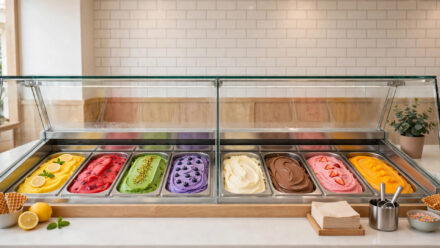
How the restaurant works. Guests fill a bowl from a refrigerated display of vegetables, tofu, noodles and proteins, have it weighed, and the kitchen cooks it in broth at their chosen spice level. Because pricing follows weight, the average ticket depends on how full guests make their bowls.
Why lenders view it the way they do. A lender sees a brand with enormous scale overall but a shorter operating history in the United States. That means less U.S. unit-level data to lean on, so a Yang Guofu Malatang franchise loan is underwritten largely on the borrower’s own experience, liquidity, site and conservative projections. Our article on financing an emerging franchise explains how lenders approach systems that are new to a market.
Yang Guofu Malatang Franchise Costs
Items 5, 6 and 7 of the current FDD set out the fees and estimated initial investment for a U.S. restaurant. Turn them into a use-of-funds schedule a lender can match to quotes.
Initial franchise fee. Item 5 states the amount, when it is due and whether a lower fee applies to additional restaurants. As an intangible cost, it is typically funded with owner equity and loan proceeds.
Lease and build-out. Most malatang restaurants lease space in strip centers, malls, campus districts or urban storefronts. Build-out covers plumbing, electrical capacity, ventilation where required, flooring, restrooms, a self-serve display wall and a weighing and ordering counter.
Equipment. The equipment package is built for fast, repeated cooking of individual bowls: broth kettles or soup stations, cooktops, refrigerated self-serve display cases, walk-in and reach-in refrigeration, prep tables, sinks, dishwashing and integrated scales tied to point-of-sale terminals.
Opening costs and working capital. Training, initial food and packaging inventory, broth and sauce supplies, pre-opening payroll, insurance, deposits, launch marketing and a reserve. A Yang Guofu Malatang franchise loan should fund this reserve rather than leave it to chance.
Total investment. Item 7 provides the full range and the assumptions behind it. Typical categories to compare against your budget include:
- Initial franchise fee
- Leasehold improvements and construction
- Cooking, refrigeration and display equipment
- Furniture, fixtures and décor
- Exterior and interior signage
- Point-of-sale, scales and technology
- Opening inventory, broth and sauce supplies
- Training and travel
- Grand opening marketing
- Additional funds for the initial operating period
Ongoing Fees and How They Affect Your Loan
Royalty. Item 6 sets the royalty, usually a percentage of gross sales. It is paid before the owner is, so it directly reduces the cash available to make loan payments.
Marketing contributions. Expect a brand or advertising fund contribution and possibly a local marketing requirement. Local marketing matters for a dish many diners have never tried.
Required supplies. Because the brand’s flavor depends on its broth and seasonings, review Item 8 to see which products must be bought from the franchisor or approved suppliers and how pricing is set.
How lenders factor these costs in. Lenders look at projected cash flow after royalty, marketing, rent, food, labor and every other expense, then compare what is left with the proposed loan payment.
Franchisor Requirements for New Owners
The brand’s U.S. website directs prospective owners to a franchise application. We could not verify published minimums for net worth, liquid capital or experience, so ask the franchisor for its current qualifications and read the FDD.
In general, a restaurant franchisor will look for enough liquid capital to cover the equity injection and a reserve, food-service or management experience (or an experienced manager), a suitable trade area and a commitment to its training, supply and food-safety standards.
The approval process. Candidates typically apply, review the FDD, meet the franchise team and secure site approval before signing. Start financing conversations early.
Ways to Own a Yang Guofu Malatang
A new restaurant. Most U.S. owners are likely to open a new location. See our restaurant start-up financing options.
Buying an existing restaurant. If an existing U.S. location is offered for sale, the buyer can show a lender real sales history. Item 17 explains transfer conditions. Learn more about franchise acquisition financing.
Multiple restaurants. Ask whether the franchisor offers multi-unit or development agreements in your market and what schedule they require.
Financing Options for a Yang Guofu Malatang Franchise
SBA 7(a) loans. Because the brand appears on the SBA Franchise Directory, the SBA 7(a) loan program is a natural fit for the franchise fee, build-out, equipment, opening inventory and working capital in a single loan.
SBA 504 loans. If you buy the building or have long-lived fixed assets to finance, the SBA 504 program may work. Most malatang restaurants lease, so 504 usually matters more for later growth than for a first location.
Conventional term loans. Experienced, well-capitalized operators may qualify for a conventional business loan.
Equipment financing. Display cases, refrigeration, soup stations, cooktops, dishwashers, scales and point-of-sale systems can be financed separately so loan proceeds and cash stretch further. Explore restaurant equipment financing and leasing.
Working capital and lines of credit. A new malatang restaurant may need time to build awareness, especially in areas where the dish is unfamiliar. Our restaurant working capital solutions can help bridge those gaps.
Seller financing on resales. When an existing restaurant is sold, a seller may agree to carry part of the price. Any seller note would generally be subordinate to the senior lender, and loan programs may limit how it is structured.
SBA Loans for Yang Guofu Malatang Franchisees
The SBA Franchise Directory lists brands whose franchise agreements have been reviewed for SBA eligibility. A listing clears the franchise relationship for SBA review but does not approve any borrower.
The brand’s listing. Yang Guofu appears on the directory under code S8321, and no additional notes are attached to the listing. In plain terms, no brand-specific conditions apply beyond standard SBA requirements. Confirm the listing is current when you apply.
Loan size. The SBA 7(a) program maximum is currently $5 million, though program rules can change.
Application tips. A Yang Guofu Malatang franchise loan package should include the current FDD, the franchise agreement, a lease or letter of intent, equipment and construction quotes, a personal financial statement, tax returns and monthly projections. Our SBA loan calculator gives planning estimates only, not an offer or approval.
How Lenders Evaluate a Yang Guofu Malatang Deal
Personal credit and financial history. Lenders review credit reports, tax returns and a personal financial statement, and usually require the owner to personally back the loan.
Net worth and liquidity. Lenders want a reserve left after closing.
Industry and management experience. Experience running a restaurant, especially a fast-casual or Asian concept, carries real weight. If you lack it, show the training plan and the manager you will hire.
Business plan and projections. Projections should reflect weight-based pricing and a realistic average ticket, lunch and dinner traffic, delivery mix, food cost for fresh ingredients and broth supplies, labor for the cooking line and a ramp-up period while the neighborhood discovers the concept.
The FDD and franchise agreement. Lenders review the term, renewal, transfer and default provisions, the supply rules in Item 8 and any franchisor financing in Item 10. Also review Item 3 and Item 4 for disclosures about litigation and bankruptcy, and check whether Item 19 includes financial performance representations. Our article on how lenders read a Franchise Disclosure Document explains what matters most.
Site and lease. Foot traffic, visibility, parking, the lease term relative to the loan term and any landlord allowance all matter.
Existing restaurant financials. For a resale, expect to provide several years of profit and loss statements, tax returns and sales reports.
Equipment and Kitchen Layout for Malatang
The self-serve display is the heart of a malatang restaurant: it must keep produce, proteins and noodles cold and look full all day, while the cooking line needs enough broth capacity to turn out individual bowls quickly at peaks. Get written quotes from approved vendors so the lender can verify each item, since equipment is tangible collateral.
Multi-Unit Growth and Development Agreements
A second or third restaurant is usually financed on the strength of the first, with the lender underwriting actual results alongside projections for the new unit. If the franchisor offers a development agreement, match your financing plan to its opening schedule and avoid commitments that would stretch liquidity before the first restaurant is stable.
Real-World Scenarios
A first-time owner near a university. A former restaurant manager finds a storefront near a large campus. She uses an SBA 7(a) loan to cover the franchise fee, build-out and working capital, and finances the display cases and refrigeration separately to preserve cash.
An experienced operator adding a new concept. An owner of two quick-service restaurants adds a location, and the lender weighs his existing cash flow alongside a conventional term loan and equipment loan.
A buyer taking over an existing restaurant. A buyer purchases a location from a relocating franchisee; the lender reviews its sales history and lease, and the seller carries a small subordinate note.
Common Mistakes to Avoid
- Signing a lease before the franchisor approves the site and the lender reviews the terms
- Assuming the ticket size of a mature market will apply in a neighborhood new to malatang
- Leaving out required broth and seasoning supply costs from food-cost projections
- Spending reserves on build-out overruns and leaving no working capital
- Skipping a careful review of FDD Items 3, 4, 8, 17 and 19
For more pitfalls that cost restaurant owners money, read restaurant loan mistakes to avoid.
Next Steps to Finance Your Yang Guofu Malatang Franchise
Step 1: Request the FDD. Use the franchise application on the brand’s U.S. website and ask for the current disclosure document.
Step 2: Review it with advisors. Go over Items 5, 6, 7, 8, 17 and 19 with a franchise attorney and accountant.
Step 3: Build a budget. Turn Item 7 into a detailed use-of-funds schedule and decide how much equity you will contribute.
Step 4: Talk with a financing specialist. Learn how SBA, conventional and equipment loans could be combined for your situation.
Step 5: Secure a site. Get franchisor approval and a letter of intent, and share the proposed lease with your lender.
Step 6: Submit your loan package. Include projections, financial statements, quotes and franchise documents.
Step 7: Close and open. Coordinate funding with construction, equipment delivery and training, and keep a working capital reserve in place.
Yang Guofu Malatang Franchise Loan FAQs
How much does it cost to open a Yang Guofu Malatang franchise?
The total estimated initial investment appears in Item 7 of the current FDD. Request the latest document before planning financing.
What is the Yang Guofu Malatang franchise fee?
The initial franchise fee is disclosed in Item 5 of the FDD. We could not verify it from the franchisor’s published U.S. materials.
What royalty does the franchisor charge?
Item 6 of the FDD lists the royalty, marketing contributions and other ongoing fees. Build each one into your projections.
Is Yang Guofu Malatang eligible for SBA loans?
Yes, the brand is listed on the SBA Franchise Directory as Yang Guofu under code S8321, with no additional notes. Each borrower must still qualify.
How much liquid capital do I need?
We could not verify a published requirement. Ask the franchisor for its current guidelines, and plan for your equity injection plus a reserve after opening.
Can I buy an existing Yang Guofu Malatang restaurant?
If a U.S. franchisee is selling, you may be able to buy the location with franchisor approval. A lender will review its financial history and lease.
Can a first-time owner get a Yang Guofu Malatang franchise loan?
Yes, if the franchisor approves you and you have adequate credit, equity and a solid plan. Restaurant experience or an experienced manager strengthens the application.
Does the franchisor offer financing?
Check Item 10 of the FDD, which discloses any financing the franchisor or its affiliates offer.
How long is the franchise term?
The franchise term and renewal conditions appear in Item 17 of the FDD. Lenders generally want the term to cover the loan period.
Can I finance equipment separately?
Yes. Display cases, refrigeration and cooking equipment can often be financed alongside a main loan.
Final Thoughts
Yang Guofu Malatang brings a build-your-own model and an international supply system to a U.S. market still discovering malatang. A strong financing plan starts with the current FDD, a realistic budget, a well-chosen site and enough working capital to build a following.
US Professional Funding helps franchise owners and buyers finance new locations, acquisitions, equipment and working capital. Learn more about our franchise financing solutions and restaurant financing programs.