Climate-Controlled Self-Storage: Do the Higher Rents Justify the Cost?
Climate-controlled units are a popular segment of the self-storage industry, and for good reason: customers storing furniture, electronics, documents, wine, and antiques often pay a meaningful premium to know their belongings aren’t baking in a metal box through a Texas summer. Developers have noticed. Much of new self-storage construction today includes climate-controlled space, and many existing owners are weighing whether to convert conventional units.
But the premium cuts both ways. Climate-controlled buildings cost more to build, more to operate, and more to maintain — and the rent premium that justifies all of it depends entirely on your market. Build climate-controlled in a market that won’t pay for it, and you’ve bought yourself higher expenses with nothing to show for it.
This guide breaks down the real economics — build costs, operating costs, and revenue — market by market, plus how lenders evaluate climate-controlled deals when the loan application lands on their desk.
1. What “Climate-Controlled” Actually Means (and What It Doesn’t)
Let’s start with definitions, because the term gets used loosely. A true climate-controlled unit is an interior-access space where both temperature and humidity are actively managed — typically kept within a moderate temperature band year-round, with humidity control to prevent mold, mildew, and warping. That’s the product that commands the premium.
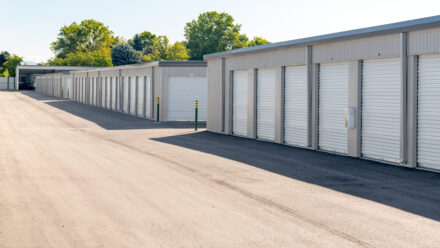
What it is not: a conventional drive-up unit with a space heater, a building with insulation but no mechanical systems, or “temperature-controlled” marketing slapped on a standard metal building. Lenders and appraisers distinguish between genuine climate-controlled space and conventional space with a label — and so do customers, once they’ve stored through one summer. If you’re evaluating a facility being marketed as climate-controlled, or planning a conversion, make sure the building actually delivers managed temperature and humidity, not just the phrase on the website.
The distinction matters for financing because the underwriting treats them as different products. Real climate-controlled space carries higher construction costs, higher operating expenses, and higher achievable rents — all three flow into the valuation and the loan sizing. A building that claims the rents without the systems is a valuation problem waiting to happen.
2. The Build Cost Premium
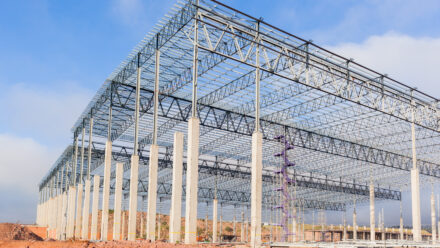
Climate control adds cost at nearly every stage of construction. The building envelope has to be tighter and better insulated. You need commercial HVAC systems sized for the full rentable area, not just an office. Interior hallways, lighting, and fire protection all get more elaborate than a row of drive-up doors. And the site work doesn’t shrink just because the building got fancier.
Construction benchmarks tell the story: single-story conventional facilities benchmark lowest per gross square foot before land and soft costs, while climate-controlled construction benchmarks meaningfully higher — and multi-story climate-controlled buildings, where the product increasingly lives, benchmark higher still. In round terms, expect a meaningful step up in hard costs for every square foot you climate-control, before you’ve bought the land or paid the architect. Full detail: How Much Does It Cost to Build a Self Storage Facility?
Two cost drivers deserve special attention. Insulation and envelope: the tighter the building, the lower your lifetime energy bills — but the higher your upfront cost. Cheap out on the envelope and you’ll pay for it every month in utility bills for as long as you own the building. HVAC sizing and zoning: oversized systems cost more upfront and cycle inefficiently; undersized systems can’t hold temperature on the hottest days. Good mechanical design is one of the highest-ROI line items in a climate-controlled budget.
For developers deciding between an all-climate-controlled building and a mixed facility, the math is straightforward: climate-control the square footage your market will pay a premium for, and build the rest conventional. Mixed facilities are common precisely because few markets support premium rents on all of the rentable area.
3. The Operating Cost Side: HVAC, Energy, and Maintenance
This is the side of the ledger developers underestimate most. A climate-controlled building is, in operating terms, a different animal from a conventional facility.
Energy is the big one. Heating and cooling thousands of square feet of interior hallway space runs a real electric bill every month, and it scales with your climate. A facility in Phoenix spends its money on cooling; a facility in Minneapolis spends it on heating; a facility in Houston spends it on both plus dehumidification. When you’re underwriting a development or an acquisition, the utility history (or the pro forma utility load) deserves the same scrutiny as the rent roll — because lenders will absolutely scrutinize it. An operator who tells you climate-controlled utilities “aren’t that bad” without showing you the bills is telling you a story, not a fact.
HVAC maintenance and replacement. Commercial HVAC systems need service contracts, filter changes, and eventual replacement of major components over a long lifecycle. Budget for it as a capital reserve, not as a surprise. Lenders underwriting a stabilized facility will look at the age and condition of the mechanical systems the same way they look at the roof: deferred maintenance is a valuation haircut.
Insurance and building systems. More complex buildings carry more complex risk — water intrusion from HVAC condensation, for example, is a claim category that barely exists for conventional drive-up facilities. None of this is prohibitive, but it all belongs in the operating budget at realistic levels, not squeezed to make the pro forma work.
The honest way to think about it: climate control converts a low-maintenance asset into a medium-maintenance one. The premium rents have to cover not just the higher mortgage payment from higher construction costs, but the permanently higher operating load. For background on how operating expenses flow into valuations, see How to Value a Self Storage Facility.
4. The Revenue Side: Rent Premiums and Occupancy
Now the good news. In markets where customers actually want climate control, the revenue premium is real and durable. Climate-controlled units typically command a meaningful rent premium over comparable conventional units — how large depends on the market, the unit mix, and how scarce the product is locally. In supply-constrained Sun Belt markets, the premium can be substantial; in mild climates where every competitor offers it, the premium compresses toward the cost of providing it.
Three things make the revenue story stronger than the raw premium suggests. First, tenant quality: climate-controlled customers tend to store higher-value goods, stay longer, and default less — they’re storing grandmother’s furniture, not the contents of a garage cleanout. Lower turnover means lower marketing and make-ready costs, which drops straight to net operating income. Second, occupancy resilience: in markets with genuine demand, climate-controlled space often leases faster and holds occupancy better through soft patches than conventional space. Third, rate growth: premium products have more headroom for annual increases, because the customer is paying for protection of valuable goods, not just square footage.
But — and this is the part that matters for the investment decision — the premium has to be measured net of the higher costs, not gross. A large rent premium sounds wonderful until you net out the higher construction debt service, the utility bills, and the HVAC reserves. Here’s how the math stacks up in practice: take the premium rent per square foot, then subtract the incremental costs — the extra mortgage payment from the higher construction basis, the added monthly utility load, and the annual reserve for HVAC maintenance and eventual replacement. What remains is the true net premium. Run the comparison on stabilized net operating income per square foot, not on street rates. That’s the number that determines whether the premium actually created value or just created expenses with better marketing.
5. Markets Where It Pencils — and Where It Doesn’t
Climate control is not a universal upgrade. It’s a market-specific bet, and the markets where it works share recognizable traits.
Where it pencils: hot, humid climates where customers genuinely fear heat and moisture damage — the Southeast, Texas, Arizona, Florida. Affluent suburbs where households own the kind of goods worth protecting. Dense urban and apartment-heavy markets where renters store entire households. Markets with older housing stock and limited existing climate-controlled supply. And anywhere with a strong commercial customer base — contractors storing materials, pharmaceutical reps, wine storage, document archives — because business customers pay premiums without blinking.
Where it doesn’t: mild coastal climates where a conventional unit never gets dangerously hot or cold — customers won’t pay a premium for protection they don’t need. Rural and low-rate markets where the achievable premium can’t cover the higher build and operating costs. And oversupplied markets where every new facility opened climate-controlled in recent years: when the product is no longer scarce, the premium belongs to whoever built first, not whoever builds next.
The practical test is simple: survey the competitors’ street rates for climate-controlled vs. conventional units in your specific trade area, and ask whether the spread covers your incremental costs with margin to spare. If the spread is thin and the market is adding more climate-controlled supply, you’re building into compression. If the spread is wide and supply is constrained, the economics are on your side. A proper development plan should include this competitive rate survey before design is finalized — not after.
6. How Lenders View Climate-Controlled Units
Lenders like climate-controlled deals — with conditions. On the positive side, the higher net operating income supports larger loan amounts, the tenant base tends to be stable, and the collateral is a modern, institutionally-recognized product type. A well-located climate-controlled facility in a supply-constrained market is one of the easier development loans to get approved.
The conditions are where deals get tested. First, lenders verify the premium against comps, not your pro forma. If your projected climate-controlled street rates sit well above every competitor in the trade area, expect the underwriter to haircut them to market — and to size your loan on the haircut number. Unsupported rent assumptions are the fastest way to shrink your proceeds. Second, operating expenses get fully loaded. The lender’s analyst will build utility costs, HVAC maintenance, and reserves into the expense load at realistic levels. A pro forma that shows climate-controlled revenue with conventional-level expenses will be rebuilt from scratch — not in your favor.
Third, the appraisal has to support it. The appraiser values the property on stabilized income at market rents with market expenses, and for special-purpose property like self-storage, the income approach governs. If the appraisal comes in below your total project cost, you’re covering the gap in cash regardless of what your pro forma said. And fourth, the standard coverage test still applies: lenders generally look for debt service coverage comfortably above the loan payment on stabilized net operating income. The higher loan amount that climate-controlled construction requires has to clear the same bar — the premium income has to do real work.
One more lender consideration: conversions. Adding climate control to an existing conventional facility — enclosing drive-up buildings, adding HVAC to interior space — is a common value-add play, and lenders will finance it, typically through expansion or improvement structures. The underwriting focuses on the incremental income the conversion creates versus its cost. Details: Self-Storage Expansion Financing.
On rates and structure for either path — new construction or conversion — start with SBA Loans for Self-Storage Facilities and Self Storage Financing Interest Rates to see how the current rate environment affects the math.
7. Frequently Asked Questions
Can climate control be added to an existing conventional facility?
Yes — it’s one of the most common value-add projects in the industry. The typical approach is enclosing existing drive-up buildings or converting interior space, adding insulation, HVAC, and hallway systems. The economics work best when your market already shows a wide spread between climate-controlled and conventional street rates. Financing usually runs through expansion or improvement loan structures rather than a standalone product.
Do climate-controlled units lease up faster than conventional units?
In markets with genuine demand for the product, typically yes — scarcity and the higher-value tenant base work in your favor. But “faster” doesn’t mean “fast.” Lenders still underwrite lease-up on conservative absorption schedules, and a climate-controlled building in an oversupplied market leases slowly like everything else in an oversupplied market. The product helps at the margin; it doesn’t override supply and demand.
How do lenders treat the higher operating expenses in underwriting?
They load them in fully. Expect the underwriter to verify utility costs against comparable facilities or engineering estimates, include HVAC maintenance and replacement reserves, and stress-test the net operating income after all of it. If your pro forma shows premium rents with thin expenses, the lender will rebuild the expense side — and the loan amount will follow the rebuilt number, not yours.
Is climate control required to get SBA financing for self-storage?
No. The SBA has no product-type requirement — conventional, climate-controlled, and mixed facilities are all eligible, provided the project meets the standard tests: an actively operated business (not a passive investment), the standard borrower injection under 7(a), size standards, and debt service coverage on the lender’s numbers. The product mix is a business decision; the SBA cares about whether the business works.
Final Thought
Climate control is neither a magic upgrade nor a waste of money — it’s a market-specific investment that pays handsomely where customers will fund it and punishes developers where they won’t. The developers who get it right do the unglamorous work first: surveying competitor spreads, loading honest utility costs into the pro forma, and sizing the climate-controlled square footage to actual demand rather than to the architect’s rendering. Do that work, and the premium rents will more than justify the premium costs.
At US Professional Funding, we bring more than 30 years of lending experience to financing self-storage construction and conversions — and we’ll pressure-test your climate-controlled pro forma against what lenders will actually underwrite before you commit the capital.