How to Value a Car Wash: What Drives Price and What Lenders Will Finance
Ask how much a car wash is worth and you will usually hear a multiple: some number times earnings. Multiples are a common shorthand in business sales, but car wash valuation is more complicated than that. A car wash is part operating business and part real estate. Its value depends on the type of wash, the condition of expensive equipment, the quality of its revenue, the site it sits on and whether a buyer can actually finance the price.
This guide explains car wash valuation as a set of value drivers rather than a single formula, so buyers and sellers can understand what they are really pricing and why a lender’s view of value often becomes the practical ceiling on price.
This article is educational. For a formal opinion of value, work with a qualified business appraiser and, where real estate is involved, a commercial real estate appraiser.
Why Car Wash Valuation Is Different
Many small businesses are valued almost entirely on cash flow. A car wash is different for several reasons:
- Real estate is often a major part of the value. A wash on owned land combines business value and property value in one transaction.
- The site is highly specialized. Stacking lanes, tunnel or bay buildings, water systems and drainage are built for one use.
- Equipment is expensive and wears out. The age and condition of conveyors, wash systems, dryers, vacuums and water systems directly affect what a buyer will need to spend soon after closing.
- Revenue quality varies widely. Recurring membership revenue, single-wash revenue and weather-driven swings each carry different risk.
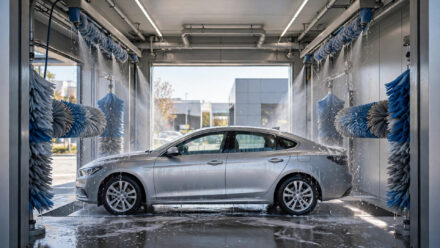
- Wash type matters. Express tunnels, in-bay automatics, self-serve washes and full-service washes have different staffing, capacity and capital needs.
Start With Cash Flow
Most car wash valuations begin with the business’s earnings. Two measures are common:
- Seller’s discretionary earnings (SDE) is often used for smaller, owner-operated washes. It adds back the owner’s compensation and certain owner-related expenses.
- EBITDA (earnings before interest, taxes, depreciation and amortization) is often used for larger washes and multi-site operators, assuming the business pays a market-rate manager.
Whichever measure is used, it should reflect the true cost of running the wash, including utilities, chemicals, labor, repairs and maintenance, insurance, property taxes and payment processing.
Be Careful With Add-Backs
Sellers often add back personal or one-time expenses to show higher earnings. Legitimate add-backs are part of valuation, but each one should be documented. Deferred maintenance is not an add-back; it is a future cost. A wash that has skipped equipment repairs may show higher recent earnings than it can sustain.
Separate the Real Estate From the Business
When a car wash includes owned land and buildings, it helps to think about value in two parts:
- The real estate: land, buildings and site improvements
- The business: equipment, customer base, membership program, brand, systems and goodwill
If the seller keeps the real estate and leases it to the buyer, rent becomes an operating expense and the business value changes accordingly. If the buyer purchases both, the total price reflects both parts. Understanding the split matters for financing, because lenders often treat real estate and business assets differently. Our guide to car wash real estate financing explains how property is typically financed.
Value Drivers: What Can Increase a Car Wash’s Value
- Consistent, documented earnings over several years, with records that reconcile to tax returns
- A healthy membership program with clear data on members, retention and revenue per member
- Well-maintained equipment with service records and remaining useful life
- A strong site with good access, visibility, adequate stacking and room for vehicles to exit safely
- Owned real estate or a long, favorable lease
- Efficient operations with reasonable labor and utility costs for the wash type
- Trained staff and management who can stay after a sale
- Environmental and permit compliance with records to prove it
Value Drains: What Can Reduce a Car Wash’s Value
- Aging equipment that will need replacement soon after closing
- Deferred maintenance on buildings, pavement, drainage or water systems
- Heavy owner involvement in daily operations
- Inconsistent or undocumented financials
- A short or unfavorable lease
- New competing washes nearby or planned
- Site limitations such as poor access or limited stacking
- Environmental uncertainty or unresolved permit issues
- Revenue concentrated in unreliable sources
Membership Revenue and Value
Many car washes now rely on unlimited wash memberships. Recurring revenue can support value, but buyers and lenders look closely at its quality: how many members there are, how long they stay, how pricing has changed and how much revenue depends on promotions. A large membership base with high cancellations is not the same as a stable one. Our guide to car wash membership revenue explains what to review.
Equipment Condition Belongs in the Price
A buyer’s real cost is the purchase price plus what must be spent soon after closing. If the tunnel controller, conveyor, dryers or water reclamation system will need replacement, that future spending should be reflected in the price or the deal structure. An equipment inspection by a qualified technician is one of the most valuable steps in car wash due diligence.
Wash Type Shapes Value
Different wash formats have different economics. An express tunnel may process more vehicles with fewer employees, but typically requires more land and a larger equipment investment. An in-bay automatic may fit on a smaller site, often alongside a fuel or convenience business. A self-serve wash has lower labor needs but different revenue patterns. A full-service wash depends heavily on labor. Our comparison of express tunnel, in-bay automatic and self-serve washes covers these differences in more detail.
How Lenders Test the Price
In a financed purchase, the lender’s analysis often becomes the practical limit on what a buyer can pay. Lenders typically look at:
- Debt service coverage: whether the wash’s historical cash flow covers the proposed loan payments with a comfortable margin
- Owner compensation: whether enough cash flow remains for a reasonable salary
- Appraised value: whether the real estate and business appraisals support the price
- Equipment and capital needs: whether near-term spending has been planned for
- Lease terms: whether a leased site offers enough term to support the loan
Our article on car wash appraisals explains how lenders use appraisals. You can also estimate what a wash’s cash flow might support by modeling payments with our SBA Loan Calculator or Conventional Loan Calculator and comparing them with documented earnings.
Why Multiples Alone Can Mislead
Published multiples vary widely because they blend very different washes: new express tunnels with growing memberships, older self-serve washes with aging equipment, washes with and without real estate, and washes in strong and weak locations. Two washes with the same earnings can deserve very different prices. Use multiples as a starting point for discussion, not as a substitute for analyzing the specific wash.
A Car Wash Valuation Checklist
- Financial statements and tax returns for recent years
- A clear calculation of earnings with documented add-backs
- Revenue split between memberships, single washes and other services
- Membership counts, retention and pricing history
- Equipment list with age, condition and service records
- Utility, chemical and labor costs over time
- Real estate details or lease terms
- Environmental and permit records
- Local competition, including planned washes
- Any required capital projects
For Buyers and Sellers
Buyers can use these drivers to decide what they are willing to pay and to identify costs that belong in negotiations. Sellers can use them to address value drains before going to market and to set a price that financed buyers can actually support. Our guides to car wash acquisition loans and how to sell a car wash cover each side of the transaction.
Frequently Asked Questions
What is the most common way to value a car wash?
Many car washes are valued based on earnings, adjusted for the specific wash type, equipment condition, revenue quality and real estate. A formal valuation from a qualified professional is recommended.
Does owning the real estate increase a car wash’s value?
Owned real estate adds property value to the transaction, but the price must be supported by both the business and the property. If the seller keeps the real estate, the business is valued with rent as an expense.
How does membership revenue affect valuation?
Stable, well-documented recurring revenue can support value. Buyers and lenders look at retention, pricing and trends rather than member counts alone.
Why would a lender finance less than the asking price?
Lenders base financing on historical cash flow, appraised value and the buyer’s ability to repay. If the price exceeds what those support, the buyer may need more equity or the price may need to change.
Final Thoughts
Car wash valuation is more than applying a multiple. Cash flow, real estate, membership quality, equipment condition, site characteristics and financing all shape what a wash is worth. Buyers and sellers who evaluate these factors together reach prices that hold up through due diligence and underwriting.
US Professional Funding provides car wash business acquisition financing for buyers of existing washes. We can help you understand what a wash’s cash flow may support before you make an offer.