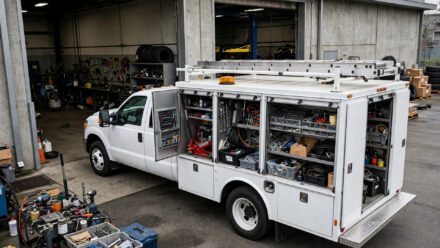
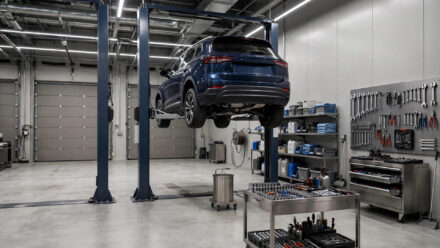
An auto repair shop earns money by the bay hour. When a lift fails, an alignment machine goes down or a diagnostic scanner needs a software subscription your techs cannot work without, every hour it is out of service is lost revenue, and customers do not wait. They go to the shop down the street.
A merchant cash advance can fund repairs, tools and parts in as fast as 24 hours. This guide explains how it works for repair shops, what it costs and how to use it so the investment pays for itself.
How Repair Shops Typically Repay
Many repair shops collect a mix of card payments, fleet account invoices and insurance or warranty payments. Because not all revenue comes through cards, shops often repay with a fixed daily or weekly payment from their bank account rather than a percentage of card sales.
Illustrative example:
– Advance: $40,000
– Factor rate: 1.35
– Total repayment: $54,000 (a cost of $14,000)
– Fixed daily payment: $450 over about 120 business days
At $450 a day, the question becomes simple: does the equipment or project produce at least that much additional gross profit per day, or protect at least that much revenue?
Smart Uses in an Auto Repair Shop
– Replacing a failed lift: A bay that cannot lift a car cannot bill hours.
– Diagnostic and ADAS calibration equipment: Newer vehicles need tools older shops may not have, and the work is profitable.
– Alignment machines and tire equipment: High-volume services that pay back quickly.
– Parts inventory for a fleet contract: When a new commercial account needs you to stock up.
– Hiring a technician: Covering the ramp-up period while a new tech builds billable hours.
Do the Bay-Hour Math
Before you sign, estimate the payback in billable hours:
– If a new lift adds 5 billable hours a day at a $120 labor rate, that is $600 a day in added labor sales, before parts.
– Compare that to the daily payment and the total cost of the advance.
If the numbers only work when the shop is running at peak capacity, the risk is higher.
When to Use Something Else
– Buying the building or a second location: Longer-term financing is a better fit.
– Large equipment purchases you can plan ahead: Equipment financing spreads the cost over the life of the equipment, often at a lower total cost.
– Ongoing cash shortfalls: If the shop is short every month, look at pricing, technician efficiency and existing debt first.
Questions to Ask Before Signing
– Is repayment daily or weekly, and is it fixed or based on sales?
– How do slow weeks or holiday closures affect the payment?
– Is there a reconciliation clause if revenue drops?
– What fees are included beyond the factor rate?
– Is there an early payoff discount?
Frequently Asked Questions
How fast can an auto repair shop get funding?
In as fast as 24 hours once your bank statements and application are complete.
Do fleet and insurance payments count toward qualifying?
Providers generally look at your overall bank deposits, so steady fleet and insurance payments can help show consistent revenue.
Can I use an MCA to buy a used lift or equipment?
Yes. The funds can generally be used for business needs, including used equipment.
The Bottom Line
For repair shops, the right merchant cash advance is one that gets a bay back to billing quickly or adds a profitable service. Do the bay-hour math, match the payment to your cash flow and keep long-term investments on long-term financing.
Learn more in our complete merchant cash advance guide.
Equipment down and cars waiting? Talk with a financing specialist.
This article is general information, not legal or financial advice. Examples are illustrative. Terms vary by provider and state.