Portable and Mobile Storage Business Financing
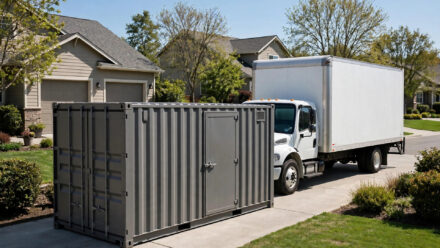
When most people picture self-storage, they picture rows of garage-style buildings on a fenced lot. But a growing segment of the industry works the other way around: the storage unit comes to the customer. Portable storage companies — the PODS-style model — deliver a weatherproof container to a home or business, let the customer load it at their own pace, then pick it up and keep it in a secure warehouse or yard until the customer needs it back.
Financing a portable storage business is a different animal from financing a traditional facility. The collateral is mostly equipment — containers, trucks, trailers — that depreciates and moves around. The real estate is a warehouse or yard, not a building full of rent-paying units. Lenders underwrite it more like a logistics or equipment business than like commercial real estate.
This guide explains how portable storage economics actually work, how lenders evaluate equipment-heavy collateral, where SBA financing fits, and what a warehouse or yard needs to look like to support a loan.
1. How a Portable Storage Business Actually Works
The revenue model has two pieces. First, the customer pays for the container rental itself — a monthly fee for the storage space, much like a traditional unit. Second, they pay for transportation — delivery of the empty container and pickup of the loaded one, sometimes with redelivery later. Some operators also sell packing supplies and padlocks, or charge for warehouse handling and access visits.
The cost structure is where it diverges from traditional storage. A conventional facility’s biggest asset is the building; once it’s built and leased up, incremental costs are low. A portable operator’s assets are rolling stock: steel or wood-framed containers, flatbed or tilt-bed trucks, forklifts, and trailers. Containers have long useful lives if maintained, but trucks wear out on a predictable cycle and need scheduled replacement. Fuel, drivers, insurance, and maintenance are ongoing operating costs that a traditional facility simply doesn’t have.
Because the customer never visits a retail office, the business lives or dies on logistics and marketing: dispatch efficiency, route density, online booking, and a warehouse operation that can locate any container on demand. When lenders evaluate these deals, the first thing to establish is that this is an operating company with real operational complexity, not a passive real estate play.
2. Fleet vs. Facility: Why the Economics Are Different
In a traditional storage deal, the lender’s primary comfort is the real estate. Land and buildings generally hold value, appraisals are straightforward, and comparable sales are plentiful. In a portable storage deal, the balance sheet is inverted: the equipment fleet is typically the largest asset, and equipment depreciates.
That changes three things about the financing conversation:
- Collateral value declines over time. A truck bought this year is worth meaningfully less in five years. Lenders size equipment loans against that declining value, which is why equipment terms are shorter than real estate terms — sized to the equipment’s useful life rather than the multi-decade horizons of property loans.
- Replacement is a recurring capital need, not a one-time event. A healthy portable operator is always cycling trucks and refurbishing containers. Lenders want to see a capital expenditure plan, not just this year’s purchase — they need to believe the fleet won’t become a deferred-maintenance problem.
- The fleet’s value depends on the business staying alive. A warehouse full of branded containers is worth far more to the operating company than at auction. Lenders know this, so they underwrite the cash flow of the business first and treat the equipment as secondary support — the opposite emphasis from a real estate loan.
None of this makes the business unfinanceable. It makes it a cash-flow loan with equipment collateral rather than a real-estate loan with a business attached. Understanding that distinction — and presenting your deal in those terms — changes which lenders say yes.
3. How Lenders Underwrite an Equipment-Heavy Business
When a lender evaluates a portable storage operator, the analysis centers on cash flow durability and asset management rather than property value. Here’s what typically carries the most weight:
- Debt service coverage ratio (DSCR). This is net operating income divided by total debt payments — the standard measure of whether the business can afford its loans. Lenders generally look for coverage comfortably above break-even: the business should earn meaningfully more than its total debt payments. For equipment-heavy businesses, some lenders want an extra cushion above the standard requirement because earnings can swing with fuel costs and driver availability.
- Container utilization. What percentage of the container fleet is rented and generating revenue at any given time? This is the portable operator’s version of occupancy, and lenders will ask for it by month, not just as an annual average.
- Customer concentration and contract mix. A mix of residential moves and commercial accounts (contractors, retailers using containers as overflow inventory space, event companies) is more resilient than dependence on a single customer type.
- Fleet age and condition. Expect questions about the average age of trucks, container refurbishment schedules, and maintenance records. A fleet audit or third-party equipment appraisal is common on larger deals.
- Operator experience. Logistics experience — dispatch, fleet maintenance, driver management — matters as much as storage experience. First-time operators can get financed, but the business plan gets heavier scrutiny.
For the broader picture of what storage lenders look for in a borrower package, see Self Storage Financing Requirements.
4. SBA Financing for Portable Storage Operators
The SBA 7(a) program is often the best fit for portable storage, for one simple reason: flexibility. A single 7(a) loan can finance containers, trucks, and other equipment alongside working capital, a warehouse purchase, and even the acquisition of an existing portable storage business. Key terms:
- Loan amount: sized to the project — one loan can cover equipment, real estate, and working capital together
- Down payment: a meaningful borrower down payment is required, with a standard minimum for established transactions (startups typically need more)
- Rate: typically variable and often tied to the Prime rate — see the linked interest-rate guide below for how rate moves affect payments
- Term: matched to the assets — shorter for equipment, longer when real estate is a significant part of the project, with blended terms negotiated around the use of proceeds
- Eligibility: the operating company must be an active business (which a portable operator clearly is), meet SBA size standards, and operate for profit in the United States
One nuance worth knowing: the 7(a) works well when equipment and real estate are financed together, but the real estate component strengthens the deal considerably. A portable operator that owns its warehouse or yard is a fundamentally stronger borrower than one leasing month-to-month — the owned real estate provides stable collateral and eliminates the risk of losing the operating site. Full program details: SBA Loans for Self-Storage Facilities.
The SBA 504 program is generally a poor fit here. The 504 finances owner-occupied real estate and long-lived heavy equipment through its multi-part structure (bank loan, development-company debenture, and borrower down payment), but it doesn’t cover working capital, and its job-creation and occupancy requirements are built around real estate projects. For an equipment-heavy operating company, 7(a) is almost always the better tool.
5. The Warehouse and Yard: What Lenders Want to See
Every portable storage business needs a home base: a warehouse or secured yard where containers are stored, maintained, and dispatched. How you hold that site matters enormously for financing.
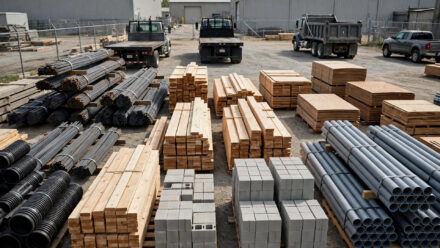
Owning beats leasing for loan purposes. A long-term lease with renewal options can work, but lenders discount it — a landlord dispute or non-renewal could strand the entire operation. Owned real estate, by contrast, is financeable collateral in its own right and can be bundled into the same SBA 7(a) loan as the equipment. If you’re buying the business and the real estate together, structure them as one project.
Zoning and permitted use need to be clean. Container storage yards can run into zoning restrictions, especially near residential areas or in municipalities with strict outdoor-storage rules. Lenders will verify that the current use is permitted and, on acquisitions, that no zoning violations are outstanding. A use that exists only by variance or special exception adds risk a lender has to underwrite.
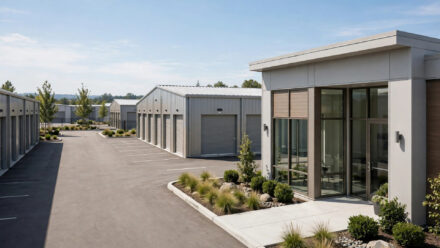
Size it for growth, not just today. A yard that’s full on day one leaves no room to add containers as the business grows — and growth is the whole thesis of the loan. Lenders notice when the site constrains the business plan. If expansion is part of your story, the site needs to support it, or you need a credible plan for a second location. On the construction side of storage real estate generally, How Much Does It Cost to Build a Self Storage Facility? gives a sense of what commercial storage buildings cost to put up.
6. Structuring the Capital Stack: Containers, Trucks, and Real Estate
Most portable storage financings combine more than one instrument. A typical structure might include an SBA 7(a) loan covering the business acquisition or startup costs, equipment, and working capital, with the warehouse real estate either included in the same loan or financed separately on a longer real estate term. Some operators use vendor or manufacturer financing for trucks alongside the SBA loan — that’s fine, but every piece of debt counts in the global debt service coverage calculation, so the total payment load has to clear the lender’s required coverage cushion.
A few structuring principles worth following:
- Match the term to the asset’s life. Don’t stretch truck financing onto a real-estate-length schedule, or compress real estate into an equipment-length term. Blended 7(a) structures handle this by weighting the term toward the dominant use of proceeds.
- Keep a working capital cushion. Portable operators face lumpy cash needs — a truck engine rebuild, a seasonal dip in moves, an insurance renewal. Deals structured with zero cushion after closing are the ones that come back as workout files.
- Plan the replacement cycle into the pro forma. If the fleet will need major truck replacements a few years down the road, that capital expenditure belongs in the projections the lender reviews — hiding it just means the coverage ratio is overstated.
- Watch the rate environment. Most 7(a) loans are variable-rate, so model the payment at rates above today’s quote, not just at it. (See How Federal Reserve Interest Rate Decisions Impact Self-Storage Financing.)
Valuing the business itself — as opposed to just the assets — follows the same income-approach fundamentals as any operating company: How to Value a Self-Storage Facility covers the methodology, which applies to portable operators too, with container utilization standing in for occupancy.
7. Frequently Asked Questions
Can a buyer get an SBA loan to start a portable storage business from scratch?
Yes, SBA 7(a) loans can finance startups, including equipment, initial working capital, and a warehouse or yard purchase. Expect a larger-than-usual down payment on pure startups, a thoroughly documented business plan, and — in most cases — relevant industry or logistics experience. Lenders underwrite startups on the strength of the plan and the borrower, since there’s no operating history.
Is portable storage considered self-storage for SBA eligibility?
What matters for SBA eligibility is that the business is an active operating company, not a passive investment. A portable storage operator — with employees, trucks, dispatch, and daily operations — clearly meets that test. The “passive real estate” eligibility questions that sometimes arise with traditional facilities don’t apply the same way here.
Should a portable operator lease or buy containers?
From a financing perspective, owned containers are collateral that supports borrowing; leased containers are an operating expense that reduces cash flow available for debt service. Leasing can make sense for testing a market or smoothing a seasonal peak, but a fleet built entirely on leased containers is harder to finance because the lender has less collateral and the business has less asset backing.
How long does financing take for a portable storage acquisition?
Plan on roughly the same timeline as other SBA acquisitions — typically a few months from application to funding — with equipment appraisals and any real estate diligence (appraisal, environmental, title) running in parallel. Deals that include real estate take longer than equipment-only deals.
Final Thought
Portable storage is a real operating business with real cash flow — and lenders who understand equipment-heavy companies will finance it on those merits. The keys are presenting it as the logistics business it is, keeping the fleet plan honest in your projections, and owning (or securely controlling) the yard the whole operation depends on. Get those right, and the SBA 7(a) is a genuinely good tool for the job.
At US Professional Funding, a nationwide commercial finance firm with over 30 years of lending experience, our firm helps storage operators — traditional and portable alike — structure financing that matches how their business actually works.